
Dwarsligger Faunapassage
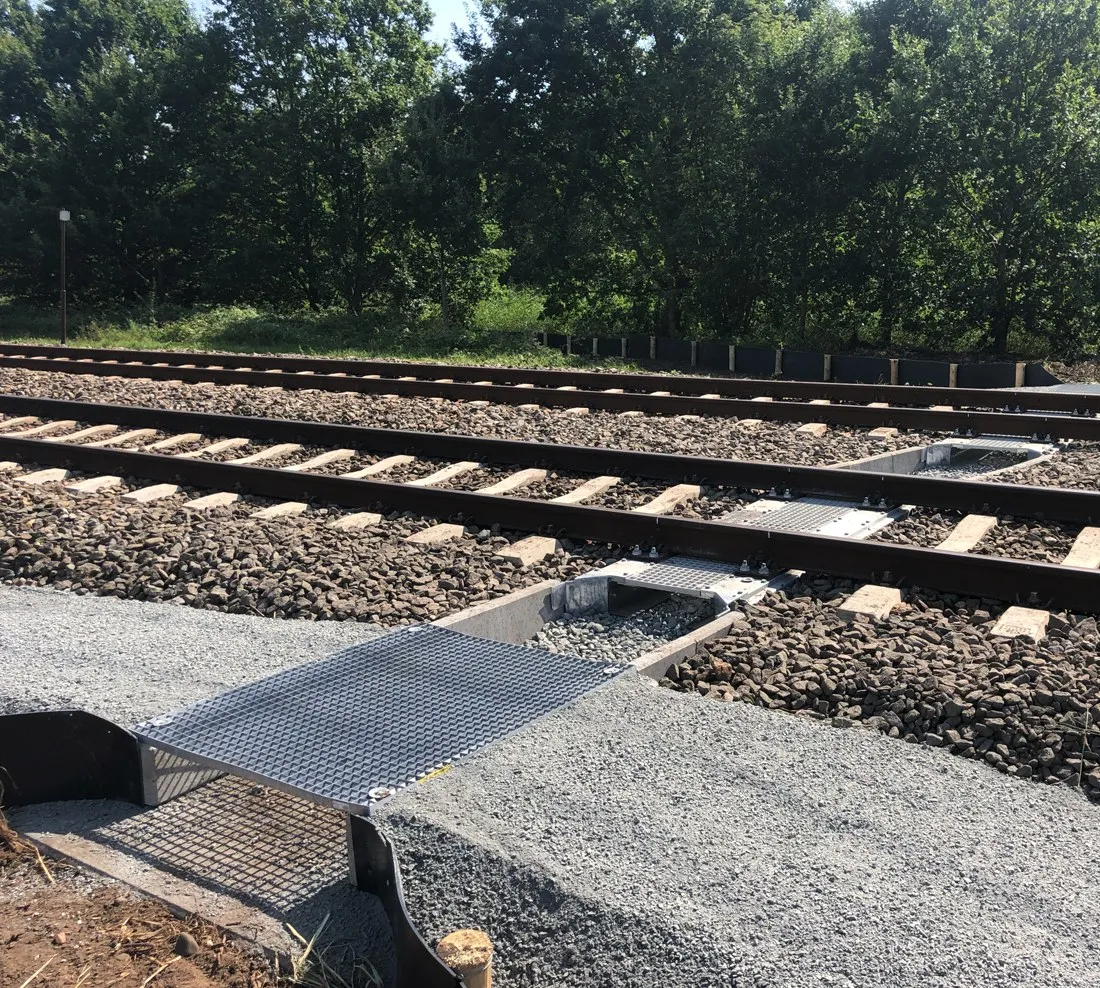
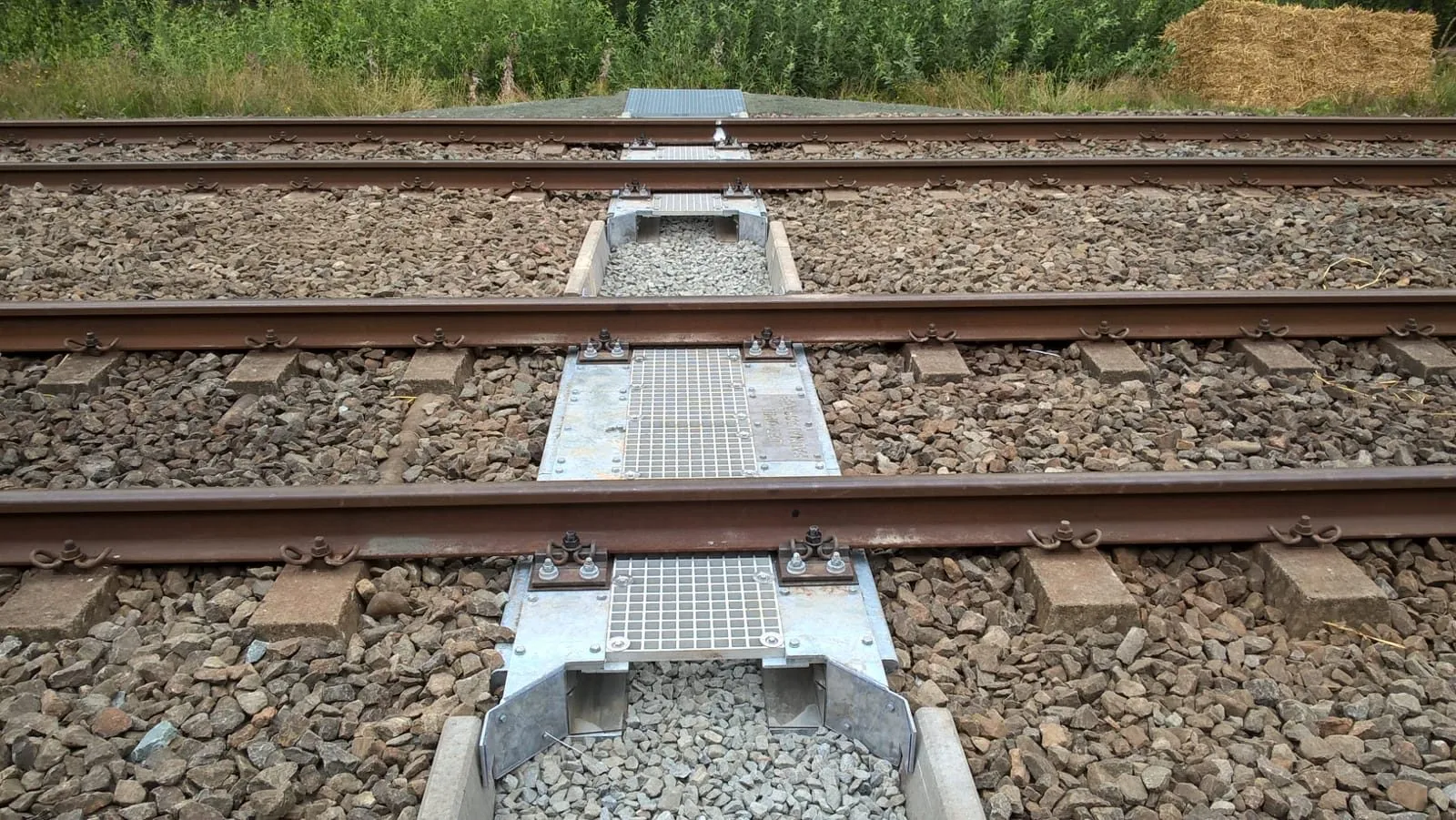
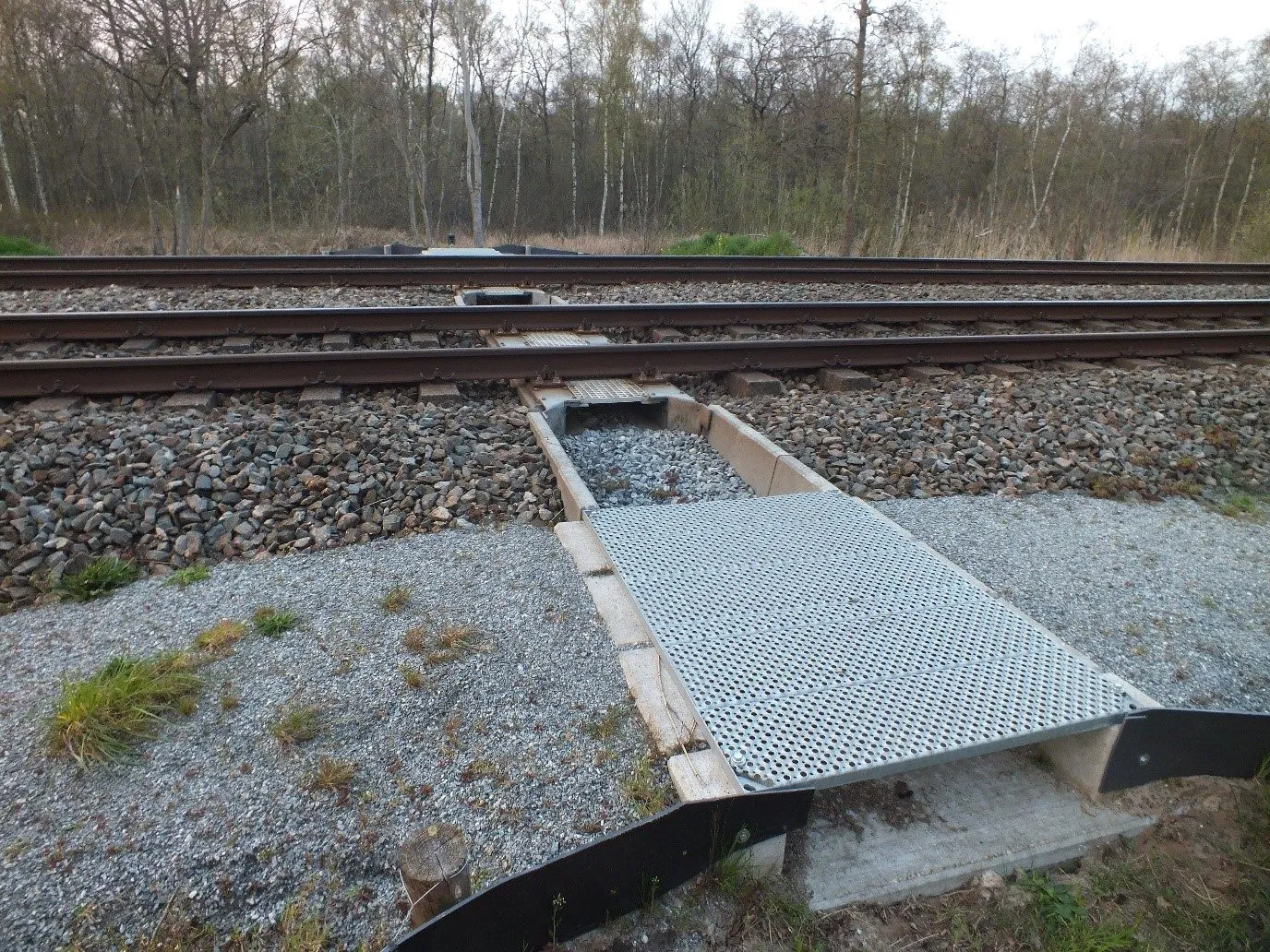
A sleeper-integrated amphibian crossing that fits between the sleepers in the ballast bed where a standard fauna tunnel cannot, and stays compatible with regular track maintenance.
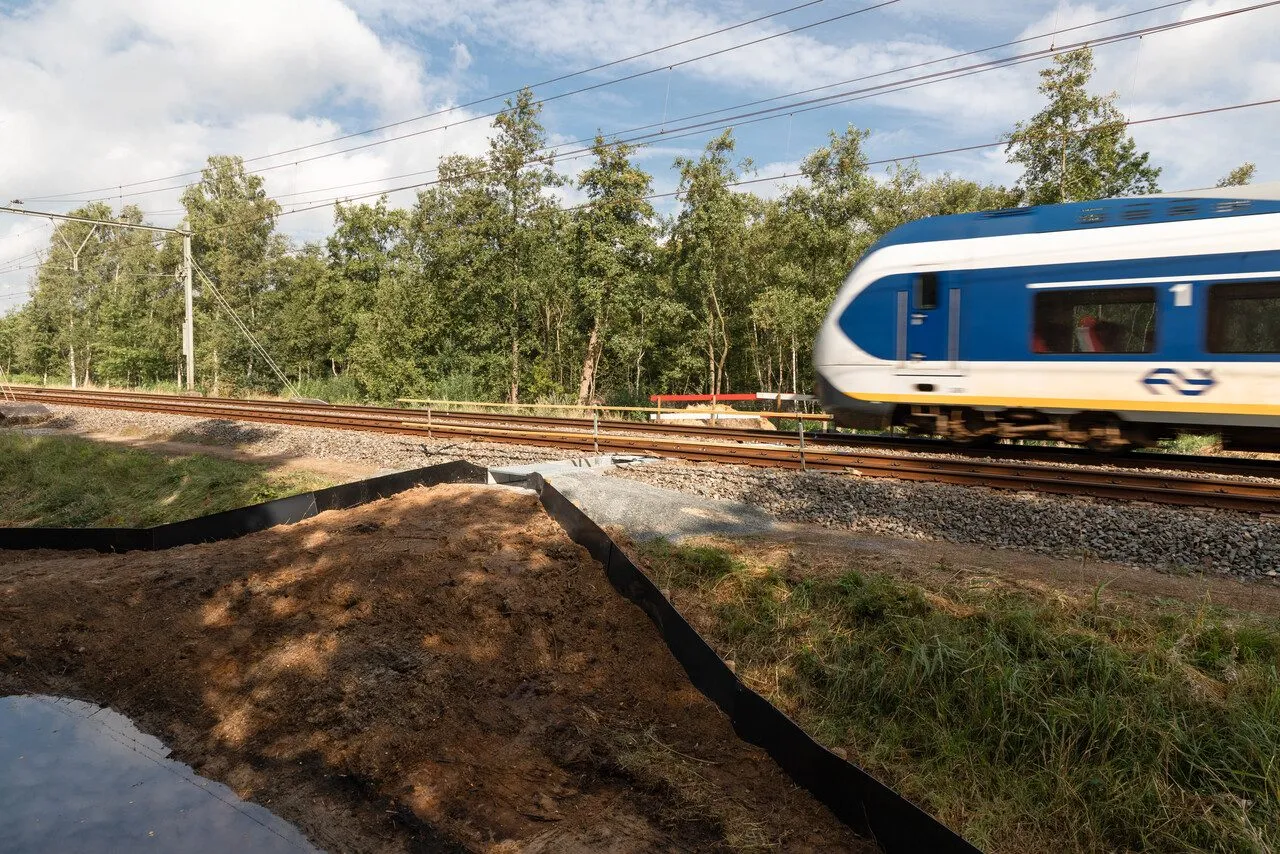
Rail infrastructure is a barrier for amphibians. They are ground-bound, slow-moving and site-faithful, and the line cuts off the route to their breeding waters and to new areas. De-fragmentation through dedicated fauna passages reconnects these severed habitats.
A standard amphibian tunnel must sit 1.80 m below top of rail for structural reasons and at least 0.10 m above the highest water level to function. At sites with a high groundwater level that leaves too little room to build one. The Dwarsligger Faunapassage instead places the crossing between the sleepers, in and under the ballast bed.
The problem it solves
Where the water sits high, a standard amphibian tunnel does not fit.
Many of the sites where an amphibian tunnel is needed lie in amphibian habitat with a high expected water level. A tunnel has to sit 1.80 m below top of rail and stay above the water, and between those two limits there is often too little room to build one. The standard passage cannot be realised within those constraints.
Earlier MJPO alternatives do not close the gap either. Amphibian gutters between the sleepers and standard concrete cable ducts are too small for the animals and obstruct the machine maintenance of track and ballast; other ballastless structures are too expensive to build or hard to maintain. Each option carries ecological, technical or economic drawbacks.
Benefits
Fits where a standard tunnel cannot.
Positioned between the sleepers in and under the ballast bed, the passage works at high-groundwater sites where the room between top of rail and water level rules out a standard fauna tunnel.
Compatible with regular track maintenance.
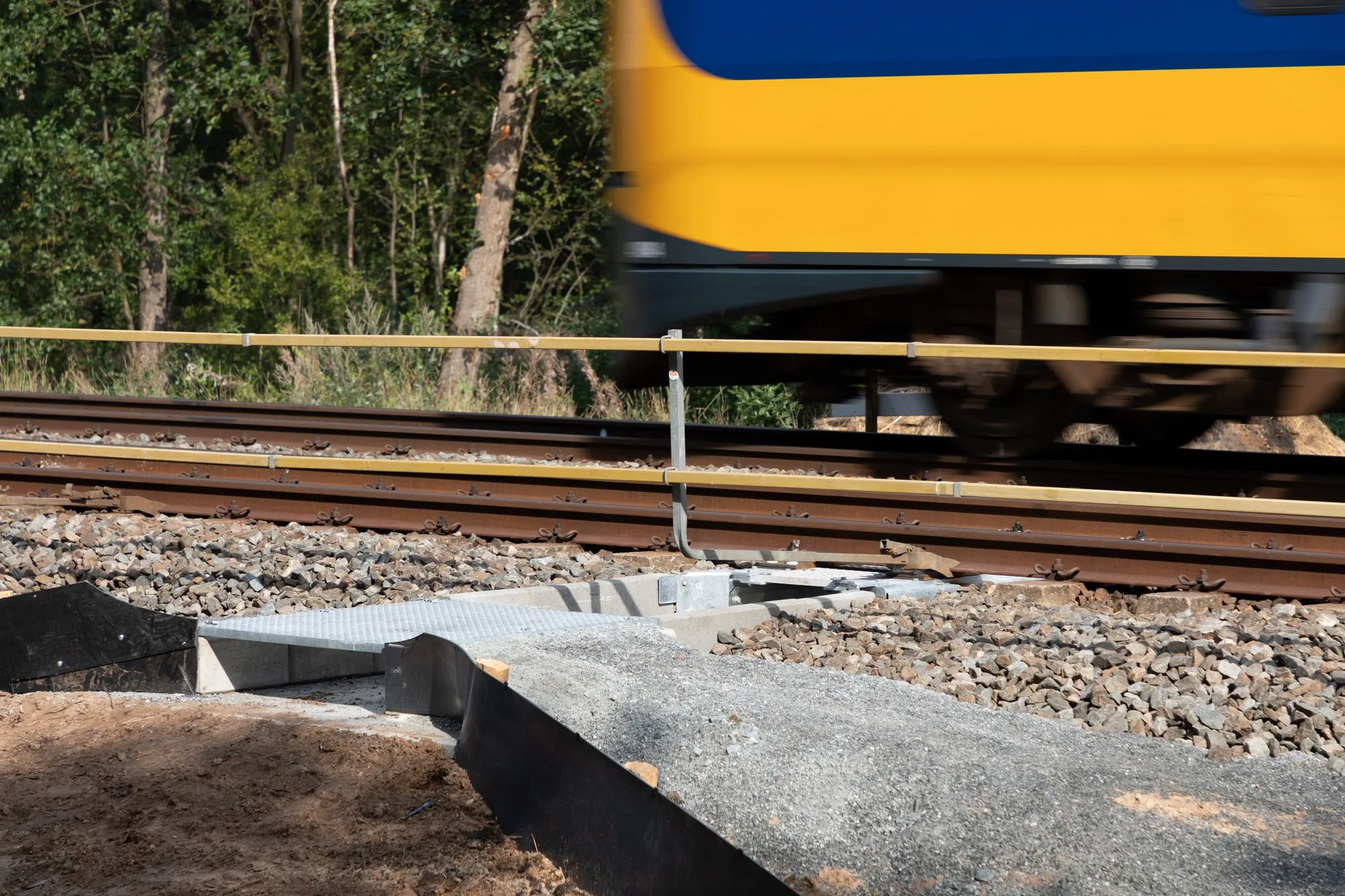
The passage stays clear of the machine maintenance of track and ballast, so tamping and ballast work continue as normal, unlike gutters and cable ducts laid between the sleepers.
Reconnects severed habitats.
The crossing restores the amphibian route the line had cut off, reconnecting breeding waters and habitats on either side of the track.
In the field
Documentation & links
Manuals, brochures and where to order.
Request more information about Dwarsligger Faunapassage.
Datasheets, installation manuals and reference projects. An engineer replies within one working day.
Or call +31 (0)162-70 05 20
Thank you, your request has been sent.
An engineer will get back to you within one working day.