
Not every component ages at the same rate
Anyone managing older track ends up at the fastening sooner or later. The rail and the ballast bed may still be in order while the clamp that holds it all together no longer does its job. That happens in two ways. Sometimes the fastening itself is worn: on duoblok track from the 1980s the clamping force of the SKL-75 clamp declines after more than twenty years in service, and rails risk coming loose. Sometimes the usual fastening simply does not fit: at insulated rail joints, expansion joints and shunting systems at marshalling yards there is too little space for a common rail clip, and at other locations a conventional fastening brings a risk of short-circuiting the rails and disturbing the train protection.
In both cases track renewal is on the table as the answer, and sometimes it is the right one. But where the problem can be solved at the fastening itself, the rest of the superstructure can stay in service for longer. Two examples from Dutch practice.
Duoblok track: declining clamping force
The first duoblok sleepers in the 1980s used the so-called DE clip or Nefit spring; later all were converted to the SKL-75 clamp, fixed with a special bolt seated in the cast-in sockets. After more than twenty years in service that construction starts to falter: the sockets wear, the fixing bolt tilts back and the clamp is pressed in less far. The clamping force drops below what the rail needs.
It does not stop there, because the wear feeds on itself. Once the clamping force is insufficient, the sockets degrade further and the bedding plate under the rail thins, so the clamping force falls further still. In curves this leads to gauge widening and damage to the duoblok sleepers. It also reduces the so-called frame stiffness of the track. Ultimately the track has to be renewed.
There are then two routes. Renewal ends the problem, but it also replaces sleepers and the superstructure around them. The alternative is to restore the clamping force with an improved clamp that does not derive its force from the worn socket. Such a clamp rests on an insulator that gives it an extra support point, so tightening the bolt readily delivers the required clamping force regardless of the condition of the socket, sleeper or bedding plate. The clamping force can be re-adjusted later as components wear further. The extra support point also removes the point-loading on the clamp holder: it carries the load vertically instead of being worked sideways, so the fastening and the sleeper last longer. The spring clip cannot run back or rotate out of position, and the insulator also improves the rail’s insulation resistance on duoblok sleepers. On duoblok track this approach extends the service life by 10 to 15 years and defers renewal of the sleepers and the superstructure around them.
Which route fits best depends on where the track sits in the spiral. Where gauge widening has already occurred in curves or sleepers are damaged, restoring the clamping force alone is no longer enough and renewal comes into view. Where the wear is still confined to socket and bedding plate, there is much to be saved with a targeted intervention at the fastening.
Special constructions: no room for a conventional clip
The second example is about fit. There are locations in the track with too little space for common rail clips: insulated rail joints, expansion joints and shunting systems at marshalling yards. At other locations a conventional fastening carries the risk of short-circuiting the rails and causing signalling problems for the train protection. Here too, sleeper and rail are not the problem; the fastening is the limiting factor.
For these locations a flat, compact rail fastening has been developed: a flat clamping plate, fixed with a countersunk Torx bolt. Nothing protrudes, and even the tool has free access when mounting or dismounting the clamp. The clamping plate fits NS90, B70 and B90 sleepers and all other sleepers suitable for W-type fastening, with a low installation height for special track constructions. The fastening complies with EU 1299/2014 (TSI), EN 13146 and EN 13481, has been tested and certified by Dekra Rail and has been applied on more than 20 km of track, including at Kijfhoek marshalling yard.
Renewal or a targeted intervention
There is no general rule that says continuing with existing track always beats renewal. Where sleepers are damaged or gauge widening has already occurred, a different clamp no longer solves it. The trade-off changes once the fastening is the limiting factor and the rest of the superstructure can still carry on: then a targeted intervention extends the remaining life of duoblok track by 10 to 15 years. And because wear at the fastening feeds on itself, it pays to weigh this up early: the sooner the intervention, the smaller the chance that the spiral has already led to gauge widening or damage to the sleepers.
Where we come in
Both solutions in this story are Kampa’s own developments. The VBK duoblok fastening is the improved clamp with the extra support point, which makes the clamping force adjustable and re-adjustable and gives duoblok track 10 to 15 more years of life. FlatFix is the flat clamping plate with a countersunk Torx bolt for locations where conventional clips do not fit or where they would risk short-circuiting the rails. If you are unsure whether your situation calls for a targeted intervention, or whether renewal is the wiser choice, our engineers will gladly think it through with you.
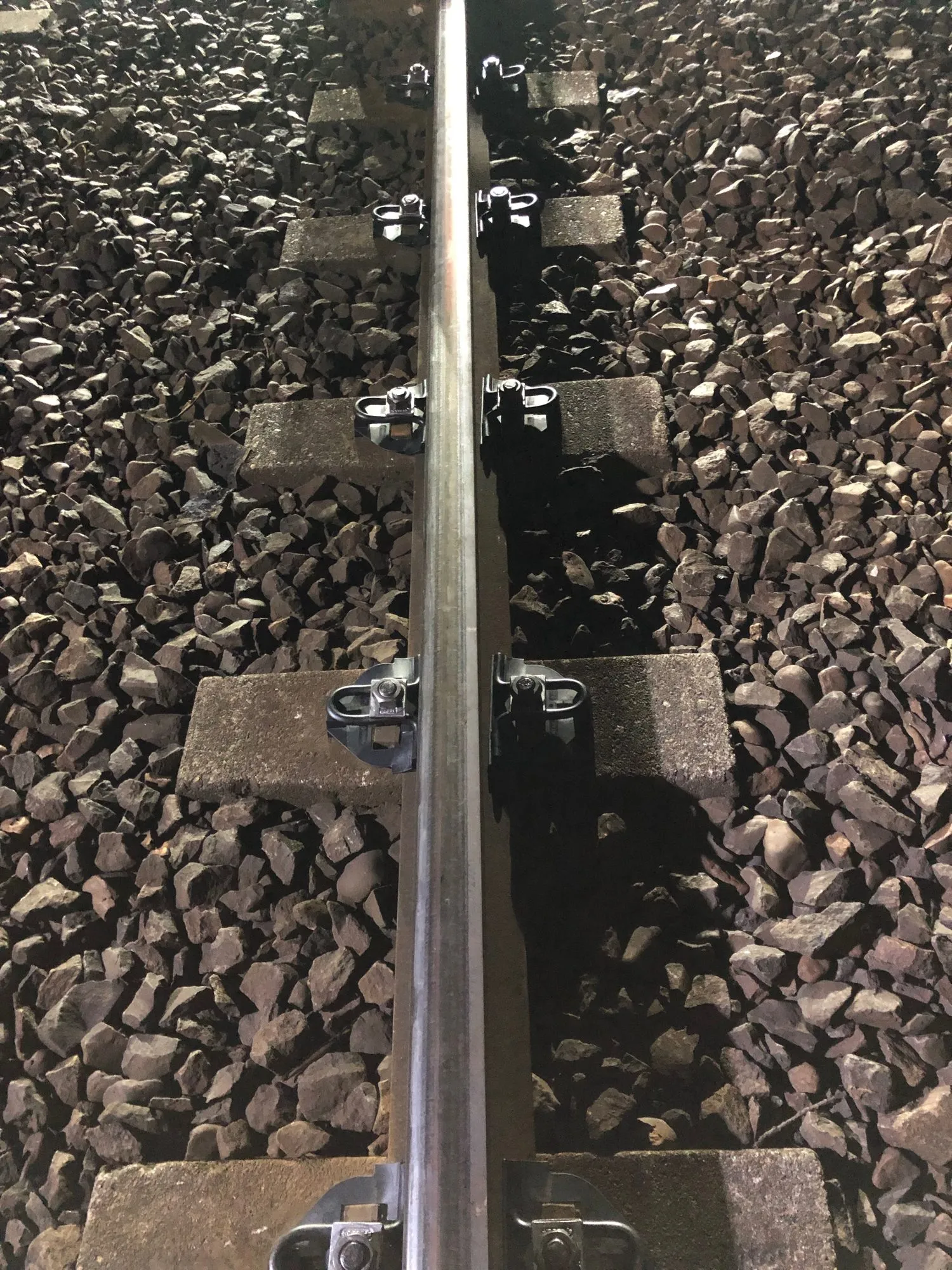
VBK clamps in the track on duoblok sleepers.